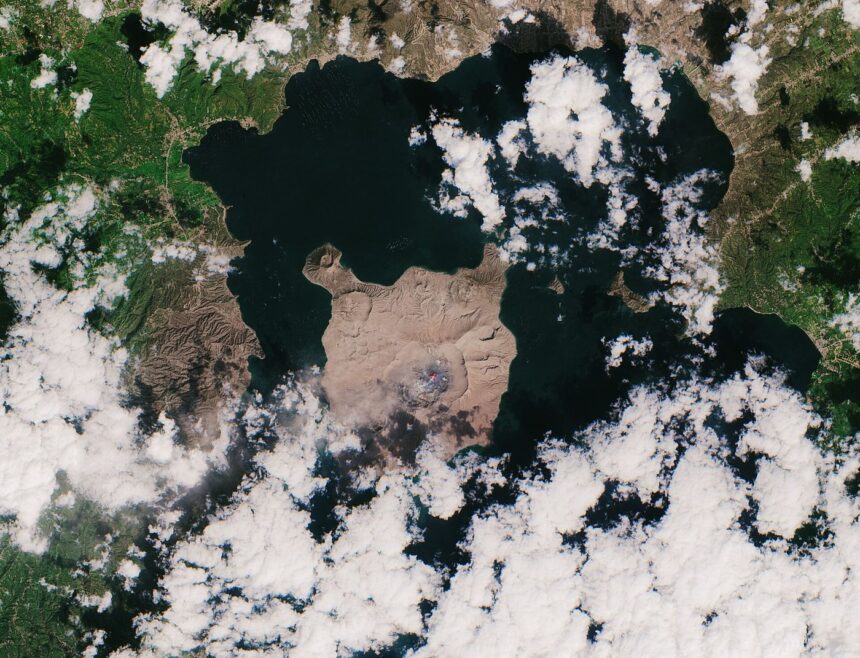
Volcanoes rarely erupt without warning, but their signals are subtle and easily missed. Long before ash rises into the sky, the ground above a restless volcano may swell by a few centimetres as molten rock gathers below. Gases escaping from vents change in composition, and clusters of tiny earthquakes ripple through the rock as it cracks under pressure. Monitoring teams combine all three clues, using satellite measurements of ground movement, instruments that sample gas, and seismometers listening day and night. No single signal is trusted on its own. Together, they build a picture that helps scientists judge whether unrest is fading or slowly building towards an eruption. Around the world’s most closely watched volcanoes, monitoring networks have grown steadily denser. Solar-powered instruments cling to crater rims, transmitting measurements through storms and ash that would quickly defeat manual checks. Schools in nearby towns use the same public data in science lessons, so children grow up understanding their landscape rather than simply fearing it.
What the Evidence Shows
The hardest part of volcano watching is turning measurements into decisions that protect people without causing needless alarm. Alert levels are therefore explained in plain language, and communities living near volcanoes practise evacuation routes so that instructions feel familiar if they ever come. Drones now sample gases in places too dangerous for people, while satellites revisit the same summit often enough to reveal steady patterns of change. Historical records matter as well, because each volcano has its own habits. By comparing today’s unrest with past behaviour, scientists can give emergency planners a clearer sense of what might happen next and how much time they may have. International cooperation strengthens the work further. Teams share software, training and hard-won experience from eruptions on other continents, because a pattern recognised in one place may save time in another. Satellites operated by different countries pass over the same volcanoes, filling gaps when local instruments fail. The goal is never a dramatic prediction with a date attached. Reporting and analysis from sources such as National Science Foundation track the same developments, and specialists following volcano monitoring say the direction is now consistent across independent lines of evidence.
The Wider Context
The wider context is a research landscape in which replication and open data now decide reputations. Findings connected to volcano monitoring are being checked by independent groups with shared datasets, and the teams involved publish their methods in full so rivals can test every step. That discipline is slower than a headline cycle, but it is why results in this area increasingly survive first contact with scrutiny.
What Happens Next
What happens next in the story of volcano monitoring will be decided by follow-up work already under way: larger samples, longer observation and instruments that have not yet come online. The researchers involved are unusually united on one point, that the current results justify the next investment of time and money. Readers will not have to wait long for the first tests of that claim. You can follow related developments in our coverage of science.
There is a practical lesson in all of this for readers deciding what to do today. Start with the verified facts, be wary of anyone promising certainty, and prefer reversible steps while the evidence is still developing. Circumstances differ by country, income and personal situation, so general guidance should always be weighed against your own context before you act on it in any significant or lasting way.