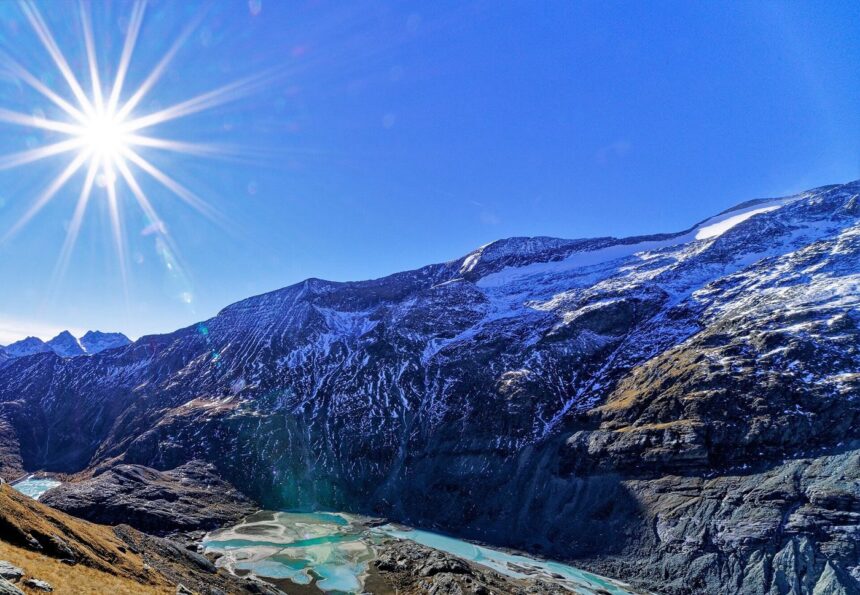
Glaciers speak in cracks and rumbles, and seismometers frozen into their surfaces are now listening closely enough to hear thousands of tiny icequakes that reveal how the ice moves over its bed. Much of a glacier’s speed is decided out of sight, where meltwater lubricates the contact between ice and rock. When that water pressure rises, patches of the bed can slip suddenly in small events, each releasing a faint seismic signal. By locating these icequakes, researchers build a moving picture of which parts of the base are locked and which are sliding, and how the pattern changes through the melt season. The method borrows from earthquake science but faces a noisier subject: crevasses open, melt streams roar and the sensors themselves ride a flowing surface. Machine learning helps separate genuine basal slips from surface cracking, especially when instruments are arranged in dense arrays. The payoff is a window into processes that decide how fast glaciers deliver ice to the ocean and raise sea levels. Satellites measure surface speed well, yet two glaciers moving at the same pace can be sliding for different reasons, with different futures. Icequake records help distinguish them and test the friction laws used inside large ice-sheet models.
What the Evidence Shows
Field teams have found that basal slip often concentrates in sticky spots and cavities whose behaviour changes with water supply, so a glacier can speed up in summer and settle again as drainage organises itself into efficient channels. Recording that cycle in detail matters because the same physics governs the great outlet glaciers of Greenland and Antarctica, where direct access to the bed is impossible. Seismic listening offers one of the few ways to observe their hidden machinery remotely and continuously. Researchers are also watching for changes in pattern that might precede a glacier surge, a rare but dramatic acceleration that can advance ice kilometres in a few years and threaten valleys below. No reliable surge forecast exists yet, and scientists are careful about promising one, but shifts in icequake location and frequency are among the most plausible early indicators. Long-term stations, powered through polar winters, are beginning to provide the multi-year records such warnings would require. The work reframes glaciers as dynamic systems that can be monitored like volcanoes and faults, with instruments tuned to their smallest movements. Listening carefully to ice, it turns out, is one of the best ways to anticipate what it will do next. Reporting and analysis from sources such as NASA track the same developments, and specialists following glacier icequakes and slipping ice say the direction is now consistent across independent lines of evidence.
The Wider Context
Funding bodies are watching glacier icequakes and slipping ice closely because the work sits at the junction of basic curiosity and practical return. Grant panels increasingly ask for a path from discovery to application, while researchers push back that the most valuable uses of fundamental science are rarely the ones written into the original proposal. The tension is productive when both sides stay honest about timescales.
What Happens Next
The long view on glacier icequakes and slipping ice is that fields advance by accumulation rather than by single announcements. This result adds a solid, checkable piece to a structure many teams are building, and its authors have shared their data so the piece can be tested from every side. That is how the picture eventually becomes reliable enough to act on. You can follow related developments in our coverage of science.