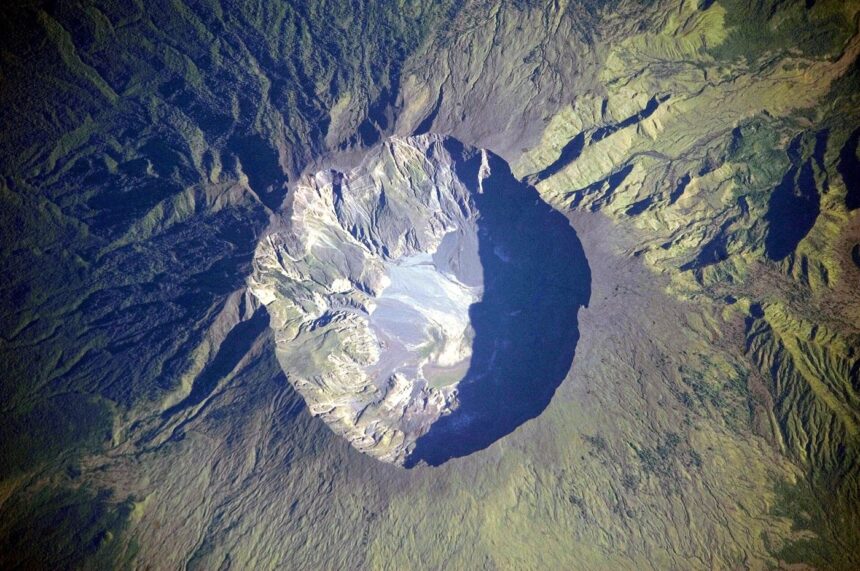
Most of Earth’s volcanism happens out of sight, on the ocean floor, where erupting lava meets cold seawater and builds mountains that usually remain submerged. Occasionally one grows tall enough to break the surface, and a new island appears where charts recently showed open water. Such births are dramatic and often brief. Waves attack loose ash and cinders from the first day, and many young islands erode away within months. A few survive, usually when lava flows cap the fragile material with harder rock, giving the shoreline armour against the sea. Volcanologists watch these events closely with satellites, hydrophones that hear underwater explosions, and instruments that detect discoloured water where eruptions are underway below the surface. Each new island is a natural experiment in how land forms and how life colonises it, since seabirds, seeds and insects arrive on a surface that began the year as seafloor. The eruptions also matter for safety. Submarine volcanoes can generate tsunamis, disrupt shipping with floating rafts of pumice, and damage the undersea cables that coastal nations depend on, so monitoring them is practical as well as scientific.
What the Evidence Shows
Ecologists who reach young islands, or study them by drone and satellite, document colonisation step by step. Microbes and algae film the new rock first, seabirds bring nutrients in droppings and feathers, and wind and waves deliver seeds that test the harsh, salty conditions. Comparing islands of different ages shows how quickly a functioning ecosystem can assemble, and which species act as founders for everything that follows. Geologists, meanwhile, use the eruptions to probe how magma moves beneath the seafloor and how the style of eruption changes as a volcano grows shallower and its gases interact more violently with water. That transition explains why some undersea eruptions are gentle lava flows while others explode into towering ash columns. For island nations, especially in the Pacific, these volcanoes are neighbours whose behaviour affects aviation, fishing grounds and evacuation planning. New islands capture public imagination, but the deeper value of studying them lies in readiness: understanding a restless ocean floor well enough to live safely alongside it. Reporting and analysis from sources such as NASA track the same developments, and specialists following submarine volcano island formation say the direction is now consistent across independent lines of evidence.
The Wider Context
Funding bodies are watching submarine volcano island formation closely because the work sits at the junction of basic curiosity and practical return. Grant panels increasingly ask for a path from discovery to application, while researchers push back that the most valuable uses of fundamental science are rarely the ones written into the original proposal. The tension is productive when both sides stay honest about timescales.
What Happens Next
The long view on submarine volcano island formation is that fields advance by accumulation rather than by single announcements. This result adds a solid, checkable piece to a structure many teams are building, and its authors have shared their data so the piece can be tested from every side. That is how the picture eventually becomes reliable enough to act on. You can follow related developments in our coverage of science.
It is also worth remembering how quickly the picture in this area has changed before. Positions that looked settled a few years ago have been revised as new data arrived, and the same humility is appropriate now. The strongest coverage of this subject, and the most useful advice, tends to come from sources that update their views openly when the facts move, rather than defending an earlier position long after it has stopped fitting the evidence available.