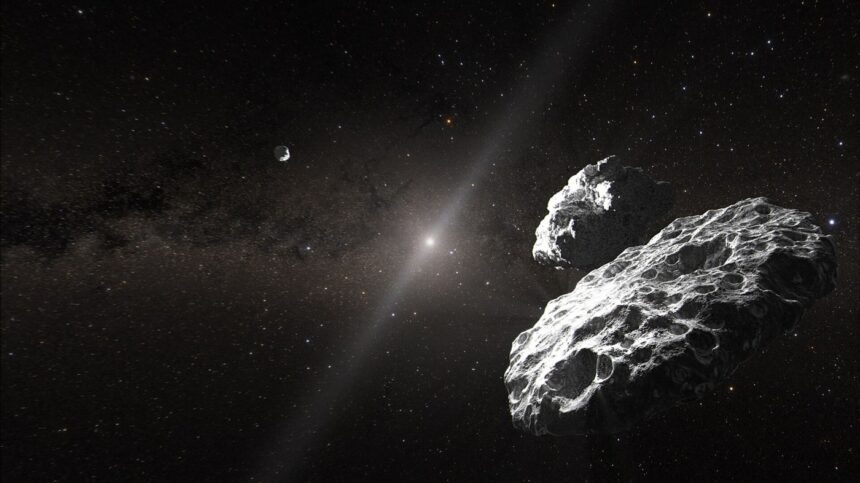
The asteroids drifting between Mars and Jupiter are leftovers from the birth of the solar system, fragments of rock and metal that never gathered into a planet. Because they have changed so little since then, they carry a record of the materials and conditions that existed more than four billion years ago. Scientists study them from Earth with telescopes and up close with spacecraft, and what they find keeps rewriting the story of how the planets formed. Some asteroids are rich in water-bearing minerals, suggesting that similar bodies may have delivered much of Earth’s water. Others contain organic compounds, the carbon-based molecules that are the building blocks of life. By comparing asteroids of different types, researchers can trace how material was mixed and moved around the young solar system, and why the inner planets ended up rocky while the outer planets grew into giants. Each fragment is a survivor from a time before Earth itself existed.
What the Evidence Shows
Sample return missions have made the study of asteroids far more precise, because rocks examined in Earth laboratories can be dated and analysed in ways no spacecraft instrument can match. Recent missions have brought back grains from carbon-rich asteroids, and early analysis found water, organic molecules and minerals that formed in the presence of liquid, confirming that these small bodies once held the ingredients for chemistry that could lead to life. Researchers are now planning visits to metal-rich asteroids, which may be the exposed cores of bodies that began to form planets before being broken apart. Each mission adds detail to the picture of a solar system that was once a crowded place of colliding and merging bodies. Scientists say the work matters beyond curiosity, since the same knowledge helps predict how asteroids behave and how a dangerous one might be deflected, linking the study of the distant past to the protection of the future. Reporting and analysis from sources such as NASA track the same developments, and specialists following the ancient asteroid fragments say the direction is now consistent across independent lines of evidence.
The Wider Context
Funding bodies are watching the ancient asteroid fragments closely because the work sits at the junction of basic curiosity and practical return. Grant panels increasingly ask for a path from discovery to application, while researchers push back that the most valuable uses of fundamental science are rarely the ones written into the original proposal. The tension is productive when both sides stay honest about timescales.
What Happens Next
The long view on the ancient asteroid fragments is that fields advance by accumulation rather than by single announcements. This result adds a solid, checkable piece to a structure many teams are building, and its authors have shared their data so the piece can be tested from every side. That is how the picture eventually becomes reliable enough to act on. You can follow related developments in our coverage of science.
It is also worth remembering how quickly the picture in this area has changed before. Positions that looked settled a few years ago have been revised as new data arrived, and the same humility is appropriate now. The strongest coverage of this subject, and the most useful advice, tends to come from sources that update their views openly when the facts move, rather than defending an earlier position long after it has stopped fitting the evidence available.