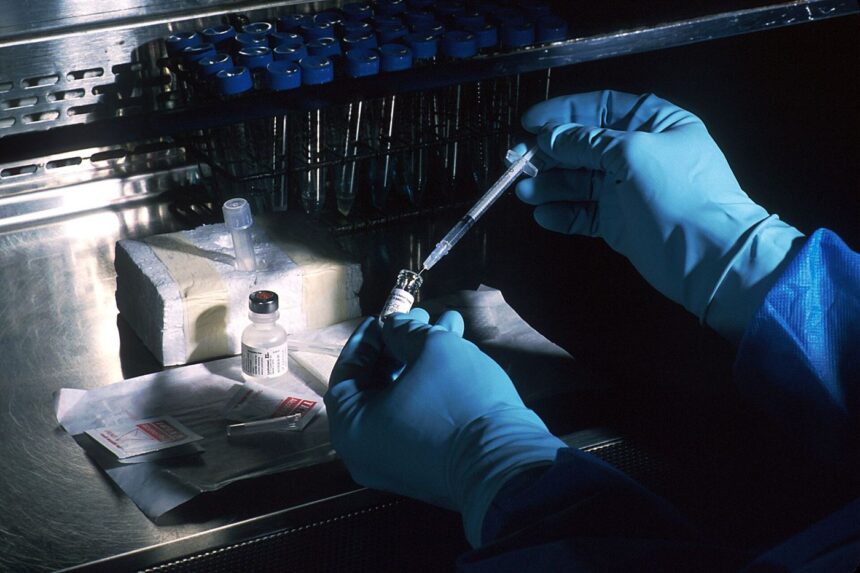
A vaccine made for a single patient, built from the genetic code of their own tumour, has cut the risk of melanoma coming back. In the phase 2b KEYNOTE-942 trial, 157 patients with high-risk melanoma that had been surgically removed were given either the personalised mRNA vaccine mRNA-4157 plus the immunotherapy drug pembrolizumab, or pembrolizumab alone. The vaccine, developed by Moderna and Merck, is designed for each patient by sequencing their tumour, identifying up to 34 mutations unique to it, and encoding them into mRNA that teaches the immune system to recognise the cancer. Results published in The Lancet in 2024 showed the combination reduced the risk of recurrence or death by 44 percent compared with pembrolizumab alone, with recurrence-free survival at 18 months of 79 percent versus 62 percent.
What the Evidence Shows
The trial is small and the result, while promising, needs confirmation in a larger phase 3 study that is now under way, but it is the first randomised evidence that a personalised cancer vaccine can improve survival. The approach is the same mRNA technology that delivered Covid-19 vaccines in record time, now turned against cancer: because each vaccine is made to order, a patient can receive it within weeks of surgery, with the whole process from tumour sequencing to injection taking about six to eight weeks. The US Food and Drug Administration has granted the combination breakthrough therapy designation, and the companies are testing the same approach in lung cancer and other tumours. If the phase 3 results confirm the benefit, cancer treatment could shift from drugs that work for many patients to vaccines built for one patient at a time. Reporting and analysis from sources such as NASA track the same developments, and specialists following personalised mRNA melanoma vaccine say the direction is now consistent across independent lines of evidence.
The Wider Context
Funding bodies are watching personalised mRNA melanoma vaccine closely because the work sits at the junction of basic curiosity and practical return. Grant panels increasingly ask for a path from discovery to application, while researchers push back that the most valuable uses of fundamental science are rarely the ones written into the original proposal. The tension is productive when both sides stay honest about timescales.
What Happens Next
The long view on personalised mRNA melanoma vaccine is that fields advance by accumulation rather than by single announcements. This result adds a solid, checkable piece to a structure many teams are building, and its authors have shared their data so the piece can be tested from every side. That is how the picture eventually becomes reliable enough to act on. You can follow related developments in our coverage of science.
It is also worth remembering how quickly the picture in this area has changed before. Positions that looked settled a few years ago have been revised as new data arrived, and the same humility is appropriate now. The strongest coverage of this subject, and the most useful advice, tends to come from sources that update their views openly when the facts move, rather than defending an earlier position long after it has stopped fitting the evidence available.