A regional forecast can say rain is likely across a whole province while one valley floods and the next stays dry. For farmers, that gap between the forecast and their own field is where money is lost: seed sown before a false rain, fertiliser washed away by an unexpected storm, a harvest left standing through a wet week. A growing network of small, locally maintained weather stations is closing that gap by measuring conditions where the crops actually grow.
Data From the Field, Not the Capital
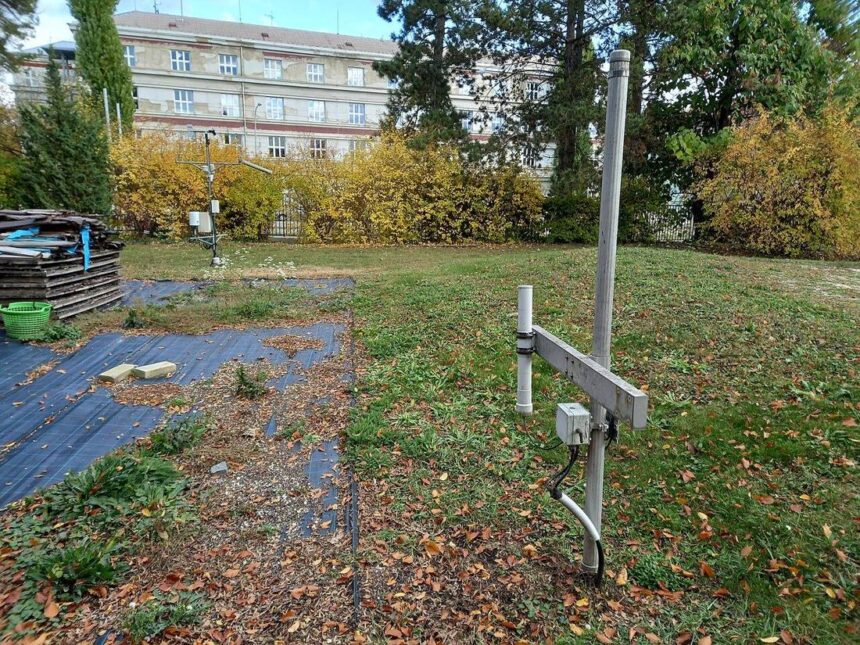
The stations are deliberately simple. A rain gauge, thermometers, a humidity sensor and sometimes a wind vane report to a solar-powered logger, which sends readings by mobile network to a shared platform. Farmer cooperatives maintain the equipment, cleaning gauges and replacing batteries, and in return members receive forecasts and alerts tuned to their own measurements rather than a distant airport’s. Agronomists say even two seasons of local records transform advice, because planting dates can be matched to when rain genuinely arrives in that valley, not when it arrives on average across a region.
The model draws on the same principle behind national networks coordinated through the World Meteorological Organization: observations shared openly become more valuable than observations kept private, since each station sharpens the forecasts of its neighbours.
Decisions the Data Changes
The practical effects show up in small, repeated choices. Irrigation is skipped when the gauge shows overnight rain was enough. Spraying is delayed when humidity readings predict conditions for fungal disease, or brought forward before a forecast dry window closes. At harvest, a run of reliable dry days lets farmers cut and dry crops with far less spoilage, which for perishable produce can be the difference between profit and loss.
How the information reaches farmers matters as much as its accuracy. Readings are shared through cooperative meetings, local radio and simple text-message alerts, so a farmer without a smartphone still hears that rain gauges recorded enough overnight rain to delay irrigation, or that a dry spell is expected to hold for the coming week. Extension workers say trust builds slowly: farmers compare the station’s record against their own observations for a season before acting on it fully. Once that trust exists, however, the alerts become part of the weekly rhythm of the village, discussed alongside prices and transport in the same conversations where farming decisions have always been made.
Challenges are mostly about continuity. Stations fail when a cooperative dissolves, sensors drift without calibration, and mobile coverage still leaves dead zones. Programmes that succeed budget for maintenance and training from the start, treating the network as rural infrastructure rather than a one-off donation of equipment. Where that happens, the humble weather station becomes one of the highest-value tools a farming community owns.