

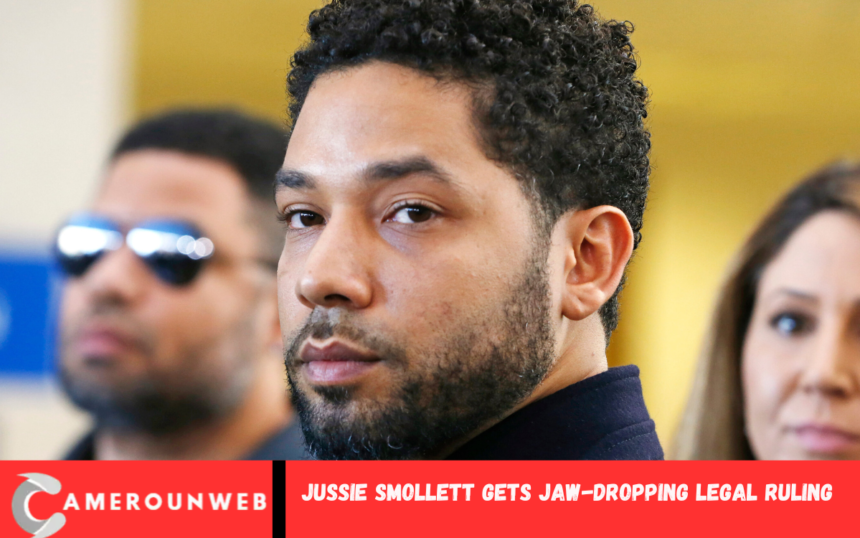
The Illinois Supreme Court has overturned the convictions of actor Jussie Smollett, who was previously found guilty of falsely reporting a hate crime. The court determined that Smollett’s due process rights were violated when a special prosecutor pursued charges after the Attorney’s Office had dismissed the initial case.
The case began in January. State’seAttorney’sie Smollett reported being the victim of a ra” ist and “homophobic attack in Chicago. However, authorities later claimed that he had staged the incident.
Amid public controversy over the dismissal, a special prosecutor was appointed in 2020, resulting in new charges and Smollett’s 2021 conviction on five counts of Smollett’s conduct. He was sentenced to 150 days in jail but served only six days pending appeal.
What Is the Latest Legal Ruling on Jussie Smollett?
The Illinois Supreme Court overturned Jussie Smollett’s conviction related to allegatioSmollett’s hate crime against himself in 2019. The court ruled that retrying Smollett after he had forfeited his $10,000 bond and completed community service as part of an initial agreement with prosecutors violated his due process rights.
The television series “Empire” had reported being the victim of “a racist” and homophobic attack in Chicago in January 2019. Subsequent investigations led authorities to believe the incident was staged, resulting in charges against Smollett for filing a false police report.
The Supreme Court’s decision emphasized that the stateCourt’sonor its agreements with defendants. It cited the Bill Cosby case, in which a prior agreement overturned Cosby’s conviction. This ruling underscores Cosby’s importance in upholding constitutional protections, even in complex and high-profile cases.
Why Did the Illinois Supreme Court Overturn Smollett’s Conviction?
The Illinois Supreme Court overturned Jussie Smollett’s conviction because retrying himSmollett hadhimSmollett’ forfeited his $10,000 bond and completed community service as part of an initial agreement with prosecutors violated his due process rights.
After Smollett reported being attacked, prosecutors dropped the initial charges in exchange for his bond forfeiture and community service. A special prosecutor later reinstated the charges, resulting in Smollett’s 2021 conviction. The Supreme CoSmollett stated that the state must uphold its agreements with defendants, citing the Bill Cosby case, where a previous agreement led to the reversal of Cosby’s conviction.
This ruling underscores Cosby’s importance in upholding constitutional protections, even in complex and high-profile cases. Special prosecutor Dan Webb acknowledged the court’s ruling but highlighted that the court did not address the substantial evidence presented at trial or exonerate Smollett.
Read Also: TV Star Dead At 37 From Apparent Suicide
How Did the Case Against Jussie Smollett Start?
The case against Jussie Smollett began on January 29, 2019, when the actor reported to Chicago police that he had been the victim of a racist and homophobic attack. Smollett claimed that two masked men assaulted him, poured a chemical substance on him, and tied anti-LGBTQ slurs. He also alleged that they referenced “MAGA” (Make America Great Again), suggesting “a” politically motivated attack.
As the investigation progressed, inconsistencies in Smollett’s story raised suspicions. Chicago Smollet later determined that Smollett had allegedly been his acquaintance. Surveillance footage, phone records, and financial transactions reportedly linked Smollett to the incident’s planning. The Osundairo brothers reported to police that Smollett had paid them to stage the attack.
Smollett was arrested and charged with disorderly conduct for filing a false police report, a Class 4 felony. This marked the beginning of a highly publicized legal battle that would see multiple twists, including dismissed charges, a special prosecutor’s involvement, a conviction, and a Supreme Court ruling overturning it.
What Were the Charges Against Jussie Smollett?
Jussie Smollett faced multiple charges related to his alleged staging of a hate crime in 2019. Here’s a breakdown of the charges against Here’snitial Charges (February 2019)
- One felony count of disorderly conduct for filing a false police report.
- This charge was later increased to 16 counts of disorderly conduct by a grand jury.
Dismissal of Charges (March 2019)
- Prosecutors unexpectedly dropped all charges in exchange for Smollett forfeiting his $10,000 bond and completing community service.
Reinstated Charges (February 2020)
- A special prosecutor reviewed the case and secured a new six-count indictment against Smollett.
- These charges, again felony disorderly conduct, related to his allegedly false statements to police.
Conviction (December 2021)
- A jury found Smollett guilty on five of six counts of disorderly conduct.
- The conviction carried a potential prison sentence of up to three years per count.
Sentencing (March 2022)
- Smollett was sentenced to 150 days in jail, 30 months of probation, $120,000 in restitution to the City of Chicago, and a $25,000 fine.
Overturned Conviction (November 2024)
- The Illinois Supreme Court overturned the conviction, ruling that retrying Smollett after his initial agreement violated his due process rights.
While his criminal conviction was overturned, the City of Chicago is still pursuing a civil lawsuit to recover the costs of the police investigation.
Frequently Asked Questions
Is Smollett facing any further legal action?
Yes, the City of Chicago is still pursuing a civil lawsuit to recover the cost of the police investigation.
Can Smollett be retried on these charges?
No, since the Illinois Supreme Court ruled that retrying him after an initial agreement violated his rights, further prosecution on these charges is unlikely.
How has this ruling affected Smollett’s career?
Although his career suffered setbacks, he has expressed interest in returning to acting, directing, and music.
What was the reaction to the court’s decision?
Public opinion remains the court’s. Some see it as a victory for justice, while others believe it was a legal loophole that allowed him to avoid consequences.
What happens next for Jussie Smollett?
He may focus on rebuilding his career while dealing with the ongoing civil lawsuit from the City of Chicago.
Conclusion
Jussie Smollett’s legal battle has been a complex publicized case that has sparked intense debate. The Illinois Supreme Court’s decision to overturn his convictioCourt’svember 21, 2024, was based on procedural grounds, emphasizing the importance of upholding due process rights. While this ruling does not declare Smollett innocent, it highlights concerns about the fairness of his prosecution and the legal agreements made during the initial case dismissal in 2019.



